

Call Us 24/7

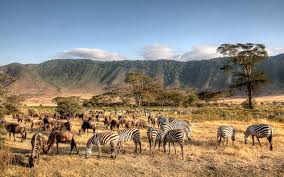
Ngorongoro Crater, the world’s largest intact volcanic caldera, is a spectacular natural wonder in Tanzania. Covering about 265 square kilometres with sides reaching up to 600 metres deep, it supports roughly 30,000 animals at any given time. Its rim rises over 2,200 metres, creating a unique climate where clouds often hang around the rocky edges and nights can feel surprisingly chilly.
The crater floor itself hosts a mix of habitats, including grasslands, forests, swamps, and Lake Makata central soda lake fed by the Munge River. These varied environments attract animals to graze, drink, wallow, hide, or climb. While wildlife can move freely in and out of the crater, the fertile volcanic soil, lush forests, and spring-fed lakes encourage many species to remain throughout the year.
Ngorongoro is also one of the few places in Tanzania where the endangered Black Rhino is thriving in the wild. Leopards are often seen here, alongside magnificent black-maned lions. Lake Magadi, with its soda waters, draws flocks of flamingos, adding a splash of color to the landscape.
Geologically, the crater formed when a volcanic cone collapsed inward, creating the massive caldera we see today. The name Ngorongoro comes from the Maasai phrase orgirra le kkorongorro meaning Big Bowl. Early records misspelled kkorongorro, resulting in the modern name Ngorongoro, reflecting its intricate depth and caldera structure.
Ngorongoro Crater is one of the most likely areas in Tanzania to see the endangered Black Rhino, as a small population is thriving in this idyllic and protected environment. It is currently one of the few areas where they continue to breed in the wild. Your chances of encountering leopard here are also good, and fabulous black-maned lions. Many flamingos are also attracted to the soda waters of Lake Magadi.
Featured Tours
Copyright © Mnene Tours | All Rights Reserved
