

Call Us 24/7

Tarangire National Park is one of Tanzania’s most rewarding safari destinations and is often visited in combination with the Serengeti or the Ngorongoro Conservation Area. However, unlike these parks, Tarangire is located much closer to Arusha, making it an ideal option for a day trip. It is also the only national park in the area where visitors can encounter a wide variety of wildlife, including many predators.
Covering approximately 2,850 square kilometers (1,100 square miles), Tarangire is a vast and diverse park. It takes its name from the Tarangire River, which runs through the center of the park and serves as the primary water source for wildlife. This permanent river is one of the key reasons for the park’s rich ecosystem and remarkable animal diversity.
Visitors to Tarangire National Park can expect to see large numbers of wildebeest, zebra, giraffe, buffalo, Thompson’s gazelle, eland, greater and lesser kudu, as well as predators such as leopards and cheetahs. Notably, Tarangire is the only place in Tanzania where oryx and gerenuk are regularly spotted.
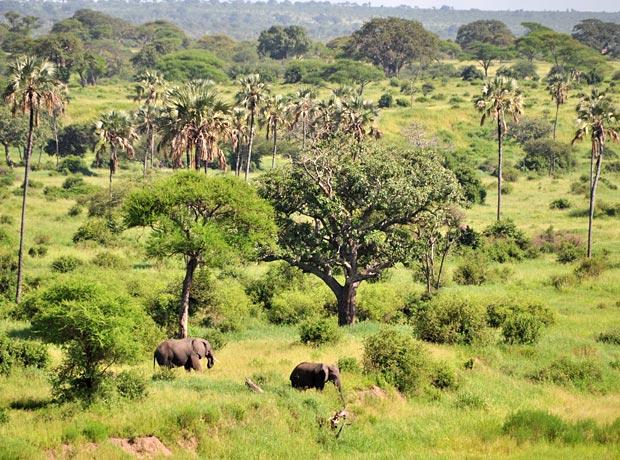
The park is especially famous for its elephant population. During certain times of the year, huge migratory movements take place within the greater Tarangire ecosystem. It is not uncommon to see herds of up to 300 elephants, along with zebras and other animals, searching for underground water in dry riverbeds.
Tarangire is also a paradise for bird lovers, with nearly 500 bird species recorded. Some of the most notable include the yellow-collared lovebirds, Kori bustard, stocking-thighed ostrich, and a wide variety of starlings that are common throughout Tanzania. The park offers excellent opportunities to spot colorful and unique bird species throughout the year.
Tarangire National Park is considered a year-round safari destination, but wildlife viewing is best during the dry season from June to October. During this period, animals from surrounding areas migrate toward the park due to the reliable water supply from the Tarangire River. This is also the best time to see the park’s famous elephant herds.
In the wet seasons (November–December and March–May), wildlife becomes harder to spot as vegetation grows thick and green. Many animals, particularly elephants, disperse across the ecosystem in search of firmer and drier ground.
Featured Tours
Copyright © Mnene Tours | All Rights Reserved
